Padel Shoulder and Elbow Pain in Doha: Causes, Load and When to Get Assessed
11 October 2026 · Dermot Simpson · 4 min read
Padel courts across Doha are busy from early evening until late at night, and many players have gone from one game a week to four or five in a single season. We see the result in clinic: sore shoulders after smashes and bandejas, and the outer elbow pain people call tennis elbow, even though they have never played tennis.
This is general information, not a diagnosis. If you have any of the warning signs listed below, see a doctor first.
Why padel loads the shoulder and elbow
Padel looks gentler than tennis, but it asks a lot of the arm. Overhead shots such as the bandeja, vibora and smash load the rotator cuff and the muscles that control the shoulder blade. Volleys at the net and defensive shots off the glass are often played with a firm wrist, which loads the forearm tendons that attach on the outside of the elbow. Racket weight and balance, a grip that is too small or too large, and hitting late can all add load to the same structures.
The usual culprit is load, not one bad shot
Most of the shoulder and elbow pain we see in padel players has no single moment of injury. It builds when playing load rises faster than the tissues can adapt: more matches per week, longer sessions, a tournament weekend, a new racket, or a return after the summer break. Sports medicine research on load, including the International Olympic Committee consensus statement on load in sport and risk of injury (Soligard and colleagues, 2016), identifies rapid increases in load as a key risk factor for injury. Tendons in particular tend to respond well to steady, progressive load and poorly to sudden jumps.
Common problems we see
- Rotator cuff related shoulder pain: an ache on the outside of the shoulder, worse with overhead shots and sometimes at night when lying on that side.
- Lateral elbow pain (tennis elbow): pain on the outside of the elbow when gripping the racket, lifting a kettle or shaking hands.
- Medial elbow pain: pain on the inner elbow, less common, often linked to wrist-heavy shots.
- Neck and upper back stiffness that changes how the shoulder moves, especially in players who also spend long hours at a desk.
Managing your load
- Build up gradually. If you want to play more, add one session at a time and hold it for a couple of weeks before adding another.
- Use pain as a guide. Mild discomfort that settles by the next morning is usually acceptable. Pain that lingers into the next day, or gets worse week on week, means the load is too high for now.
- Reduce rather than always stop. Fewer or shorter matches, leaving out smashes for a few weeks, or drilling at lower intensity often keeps you on court while things settle.
- Strengthen off court. Progressive strength work for the rotator cuff, the shoulder blade muscles and the forearm builds capacity for what you ask of them on court. Exercise is the core of treatment for rotator cuff related shoulder pain in current reviews (Lewis, 2016).
- Check your equipment and technique. A lighter or differently balanced racket, a correctly sized grip and a coach's eye on your overheads can all reduce strain.
- Respect the heat. Even indoors, Doha evenings are warm, and fatigue and dehydration late in a long session are when technique slips.
A note on injections for elbow pain
Steroid injections for tennis elbow can reduce pain in the short term, but the evidence is a reason for caution. In a randomised trial published in JAMA (Coombes and colleagues, 2013), people who received a corticosteroid injection had poorer outcomes at one year and more recurrences than those who received a placebo injection. Discuss the trade-offs with your doctor before choosing that route.
When to get assessed
Book an assessment if pain has lasted more than two or three weeks despite playing less, if it wakes you at night, if you cannot play an overhead shot or grip the racket without pain, or if it comes back every time you build up again.
When to see a doctor first
- A sudden pop or tearing feeling with immediate weakness, for example being unable to lift the arm or bend the elbow with force.
- A shoulder that has dislocated or felt like it slipped out, or an obvious deformity after a fall on court.
- Numbness, tingling or weakness spreading into the hand.
- A hot, swollen, red joint, or fever.
- Shoulder, arm or jaw pain with chest tightness, breathlessness or sweating during or after play: treat it as an emergency and call 999.
How physiotherapy helps
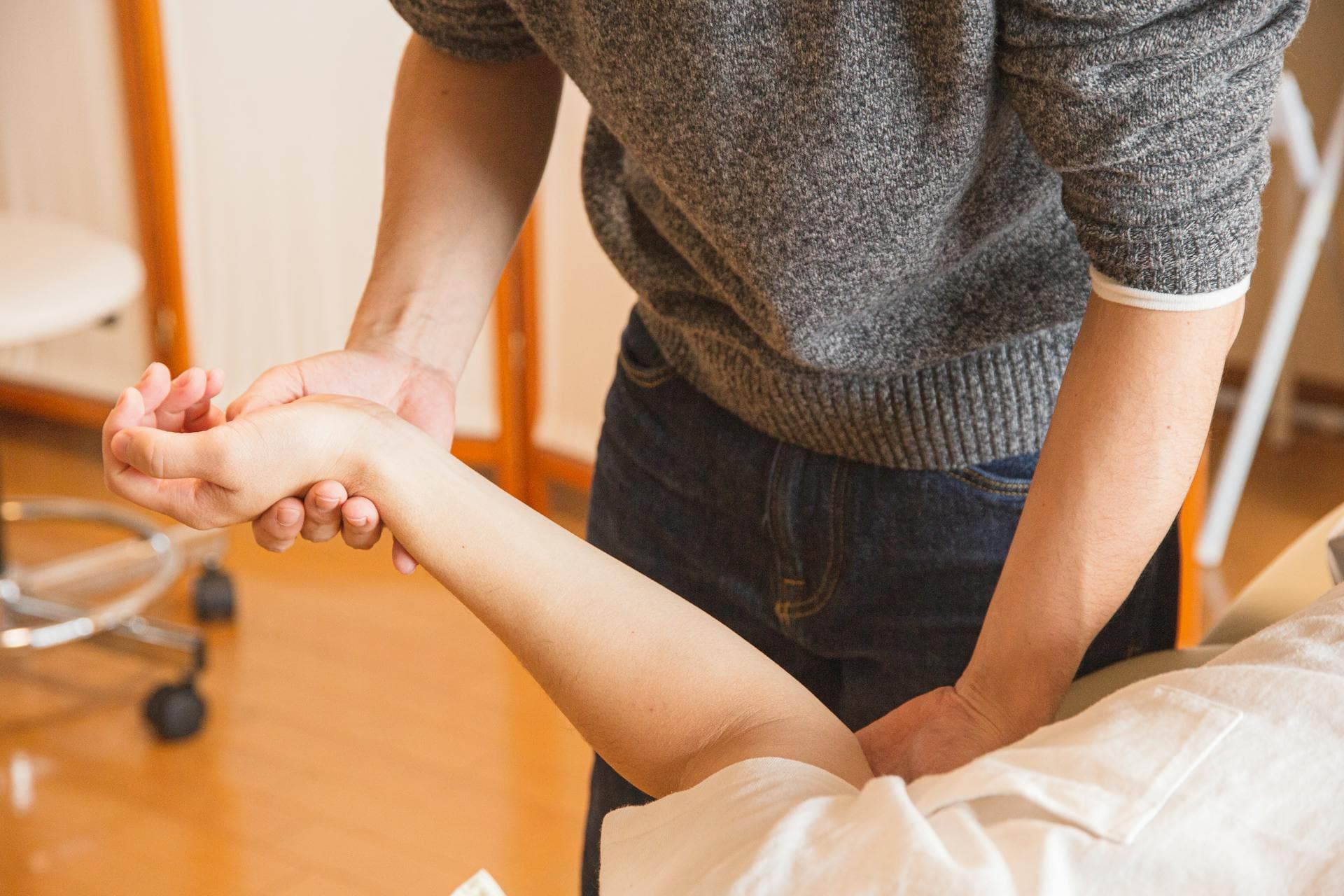
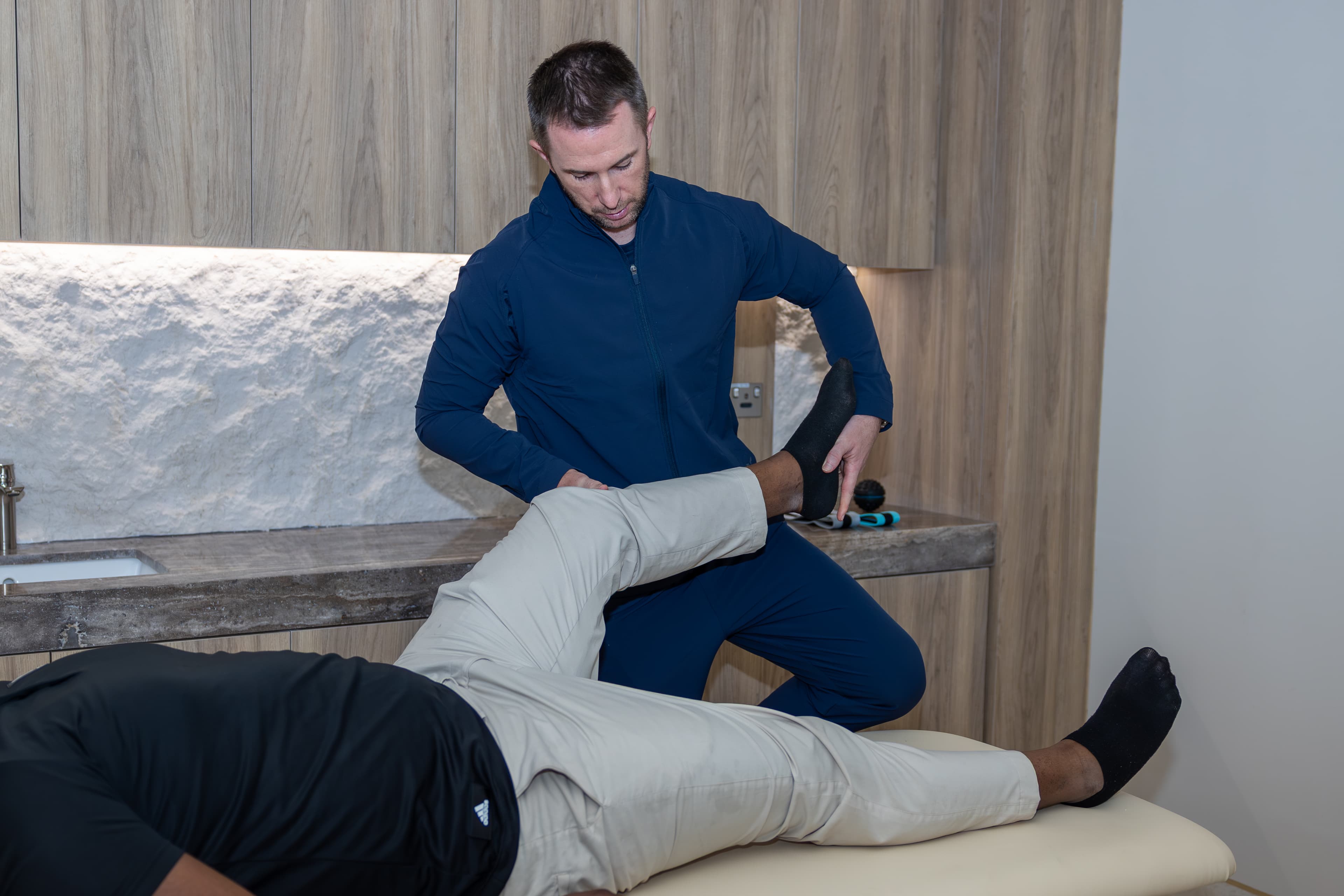
At MVP we assess the whole chain: neck, upper back, shoulder blade, shoulder, elbow and grip strength, and we ask about your playing week, your racket and your goals. Treatment combines load advice, hands-on work where it helps, and a strength programme you can fit around your matches. Where it is sensible, the aim is to keep you playing while you rehab, not to take you off court by default. Sessions are one to one, 45 minutes, 600 QAR.
Shoulder tendinitis: rotator cuff physio at MVP
Shoulder pain: physio assessment at MVP
Sports massage for players who train hard
Sources
- Soligard T, et al. How much is too much? (Part 1) International Olympic Committee consensus statement on load in sport and risk of injury. British Journal of Sports Medicine, 2016.
- Lewis J. Rotator cuff related shoulder pain: assessment, management and uncertainties. Manual Therapy, 2016.
- Coombes BK, et al. Effect of corticosteroid injection, physiotherapy, or both on clinical outcomes in patients with unilateral lateral epicondylalgia: a randomized controlled trial. JAMA, 2013.
About the author
Dermot Simpson
Chartered Physiotherapist · Co-founder
BSc Physiotherapy (UCD) · MSc Sports Physiotherapy (UCD) · Aspetar Doha
Dealing with an injury?
One-to-one physiotherapy assessment, 45 minutes, at Virgin Active Msheireb. 600 QAR.