Bringing Elite Sport Rehab Standards to MVP Physio: Inside Our Latest JOSPT Publication
26 July 2026 · Dermot Simpson · 6 min read
I led the development of The Aspetar Hamstring Injury Rehabilitation Pathway together with colleagues at Aspetar Orthopaedic and Sports Medicine Hospital in Doha. As lead author, I coordinated the project from development through publication in JOSPT Open, the open-access journal of the Journal of Orthopaedic & Sports Physical Therapy. The pathway was developed with a steering group of senior clinicians at Aspetar and independently evaluated by 32 practitioners working in elite-level sport, who rated its clinical relevance, acceptability, and practical application.
This article is a plain-language tour of what the pathway is, why it matters, and what it changes for anyone rehabilitating an injury with us at MVP.
Why hamstrings deserve this much attention
Hamstring strain injuries are among the most common injuries in any sport that involves sprinting: football, rugby, athletics, padel, even a hard five-a-side on a Thursday night. They are also among the most frequently reinjured, and a rushed return is the classic way it happens. The problem is rarely effort. It is structure: deciding progression by the calendar (“week 3, start running”) instead of by what the athlete's tissue can actually tolerate.
A pathway built on phases, not weeks
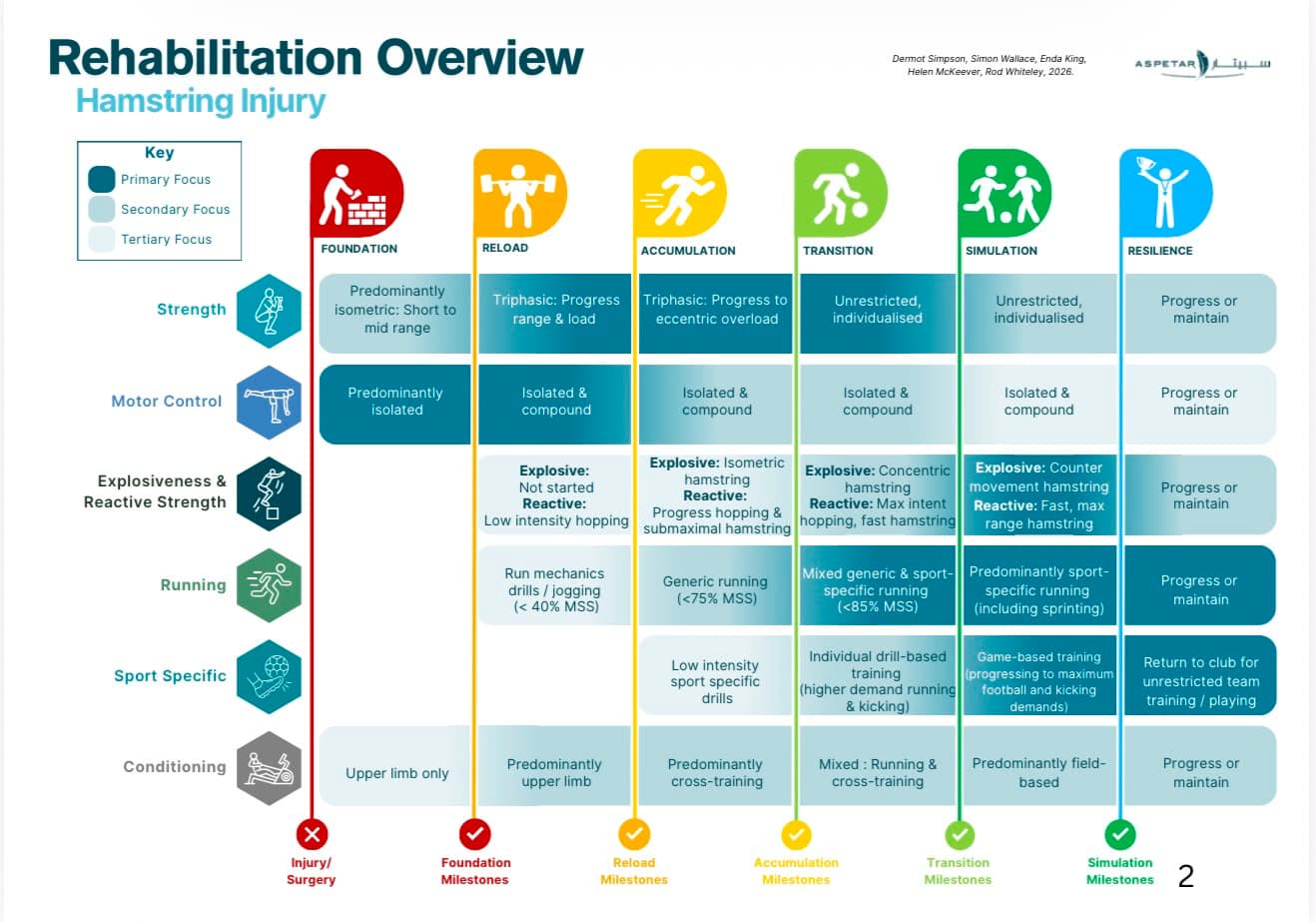
The pathway organises rehab into six phases: Foundation, Reload, Accumulation, Transition, Simulation and Resilience. Each phase sets targets across strength, motor control, explosiveness and reactive strength, running, sport-specific work and conditioning. You do not leave a phase because a fortnight has passed. You leave it because you have met its exit criteria.
Testing, not guessing
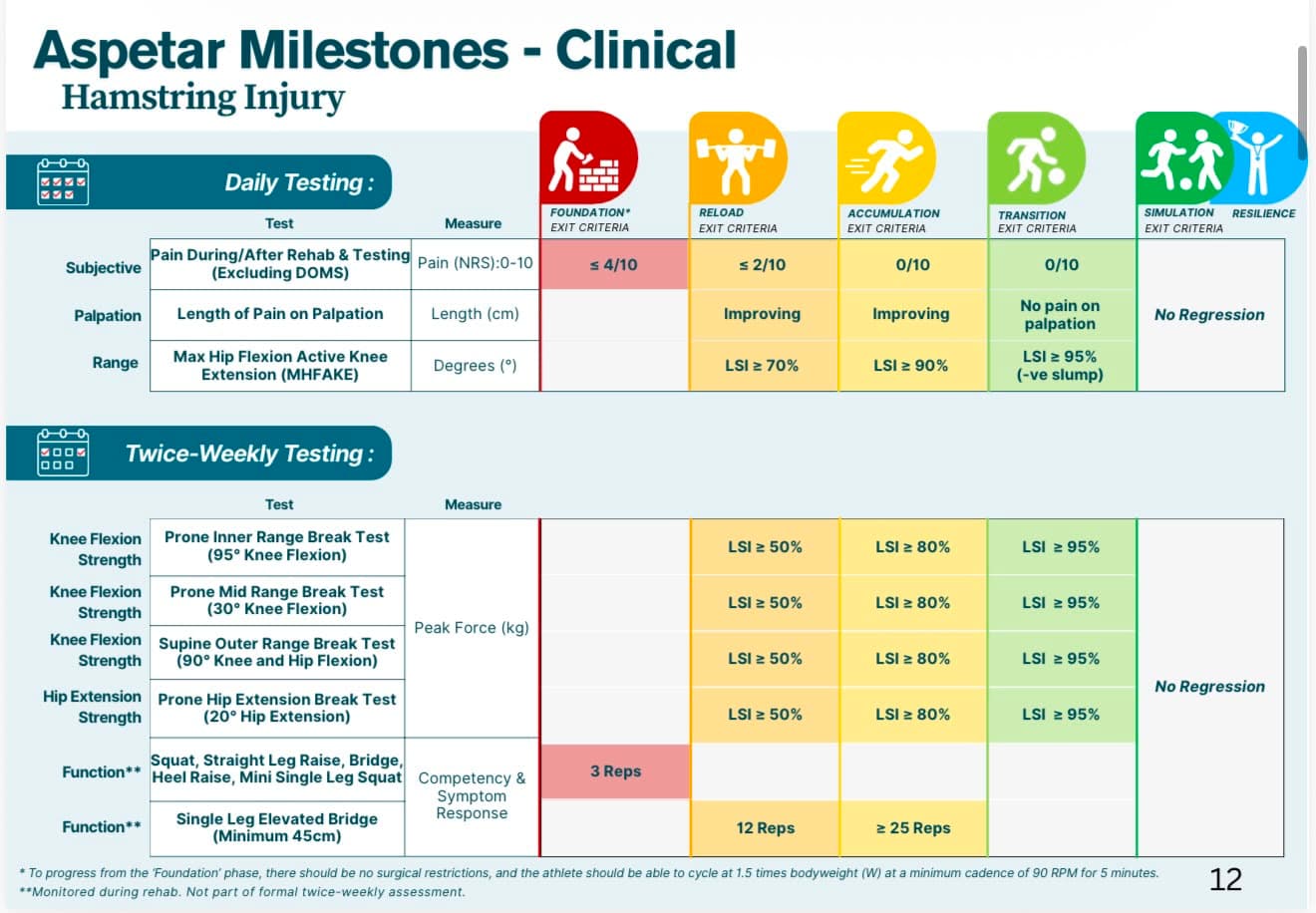
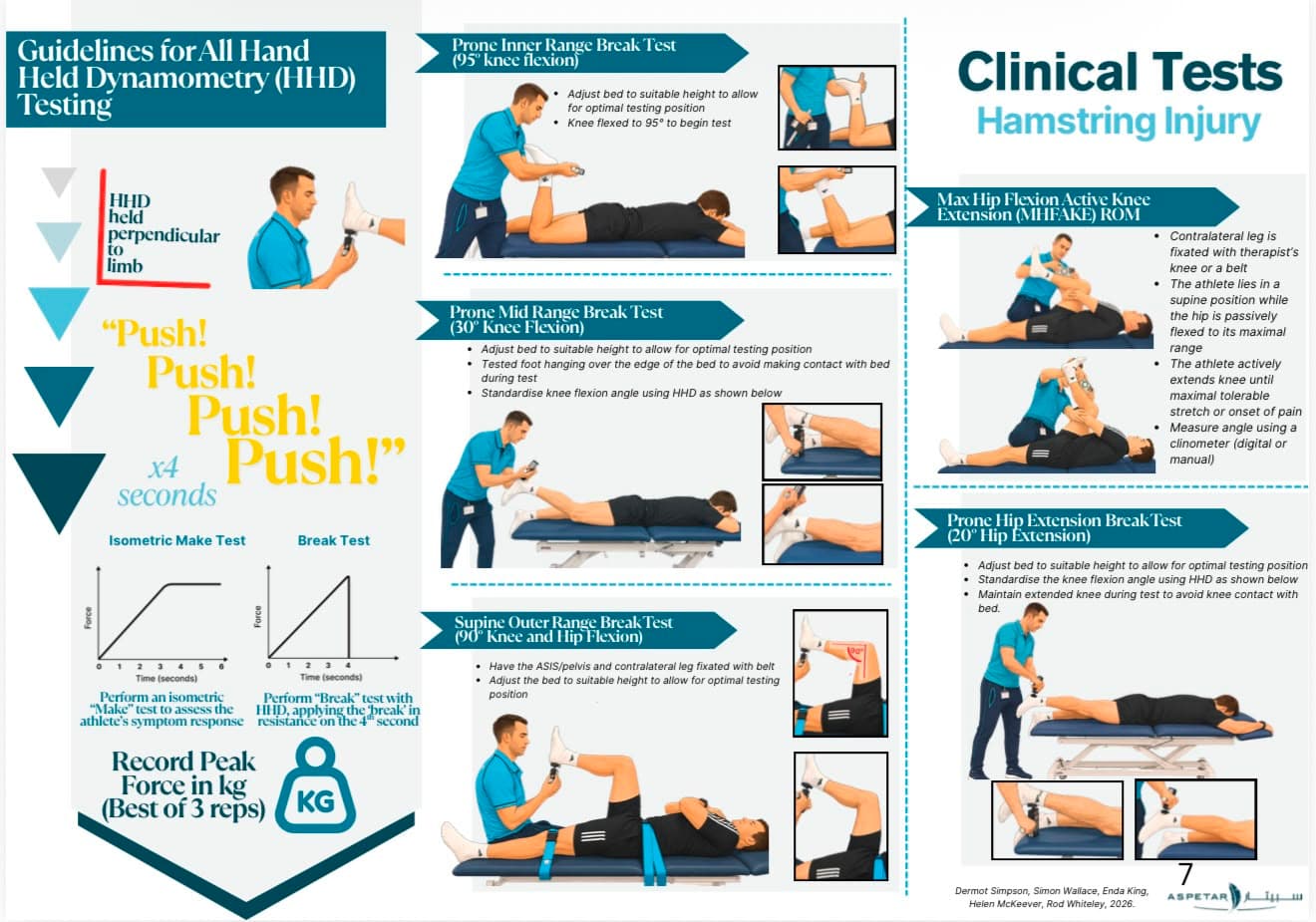
What makes the pathway usable day to day is that every exit criterion is measurable. Some markers are checked at every session: pain during and after rehab, pain on palpation, and maximal hip flexion active knee extension range. Others are tested twice a week, including hamstring strength measured with a hand-held dynamometer at defined joint angles, compared side to side as a limb symmetry index. Thresholds step up phase by phase: roughly 50 percent symmetry to progress early on, 80 percent in the middle phases, and 95 percent or better before the highest-demand work.
What this changes at MVP
MVP is a private clinic inside Virgin Active Msheireb, not a national sports medicine hospital. But the thinking transfers directly, and it is how we already work: assess first, set criteria, progress on evidence rather than optimism. If you come to us with a hamstring strain, your plan will follow this structure, scaled to your sport and your goals. The same logic shapes how we approach calf strains, quad strains and return to running after other lower-limb injuries.
- You will know which phase you are in, and what the exit criteria are.
- Strength is measured, side to side, not eyeballed.
- Return to sport is a graded process of simulation and resilience work, not a single green light.
Read the paper
The full paper is open access in JOSPT Open under the title The Aspetar Hamstring Injury Rehabilitation Pathway. If you are dealing with a hamstring injury, recent or recurring, book a physiotherapy assessment and we will map out where you are on the pathway and what your next milestone is.
About the author
Dermot Simpson
Chartered Physiotherapist · Co-founder
BSc Physiotherapy (UCD) · MSc Sports Physiotherapy (UCD) · Aspetar Doha
Dealing with an injury?
One-to-one physiotherapy assessment, 45 minutes, at Virgin Active Msheireb. 600 QAR.